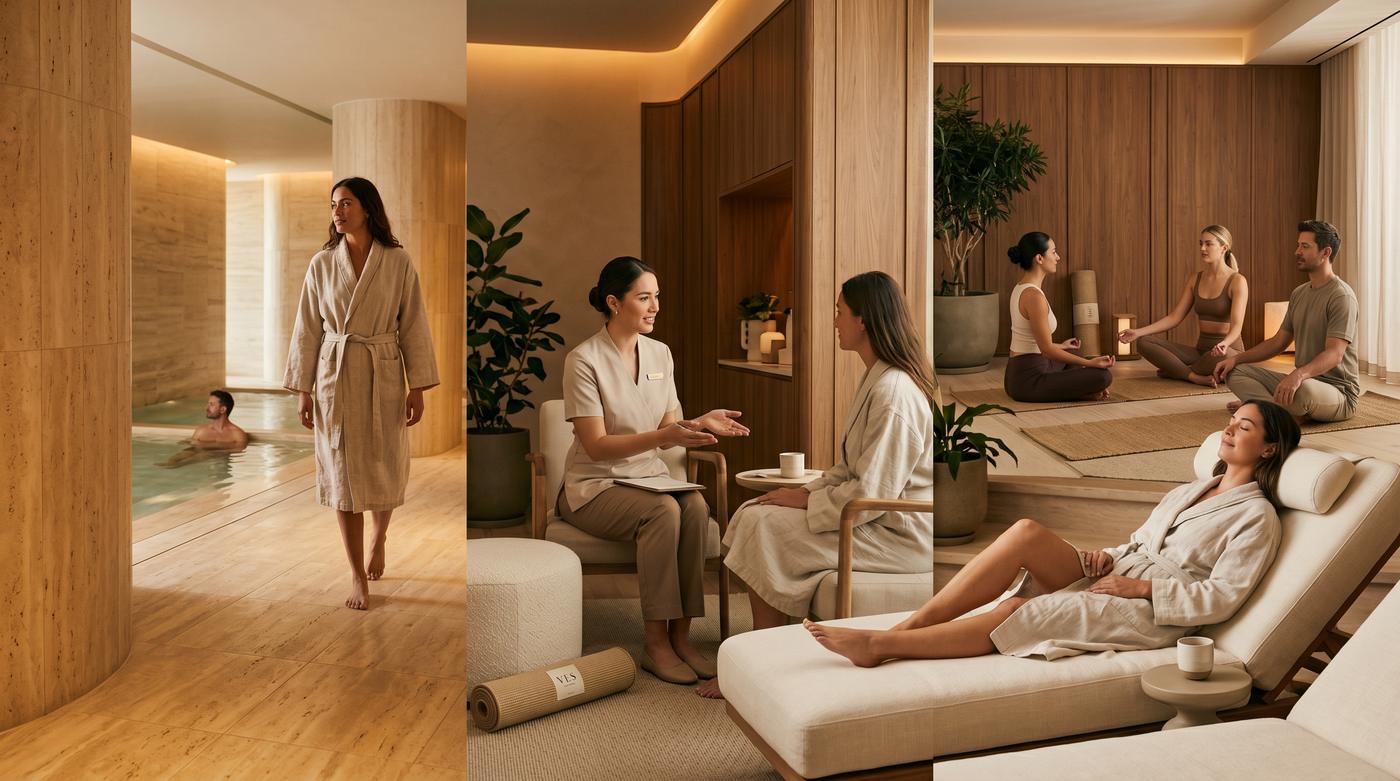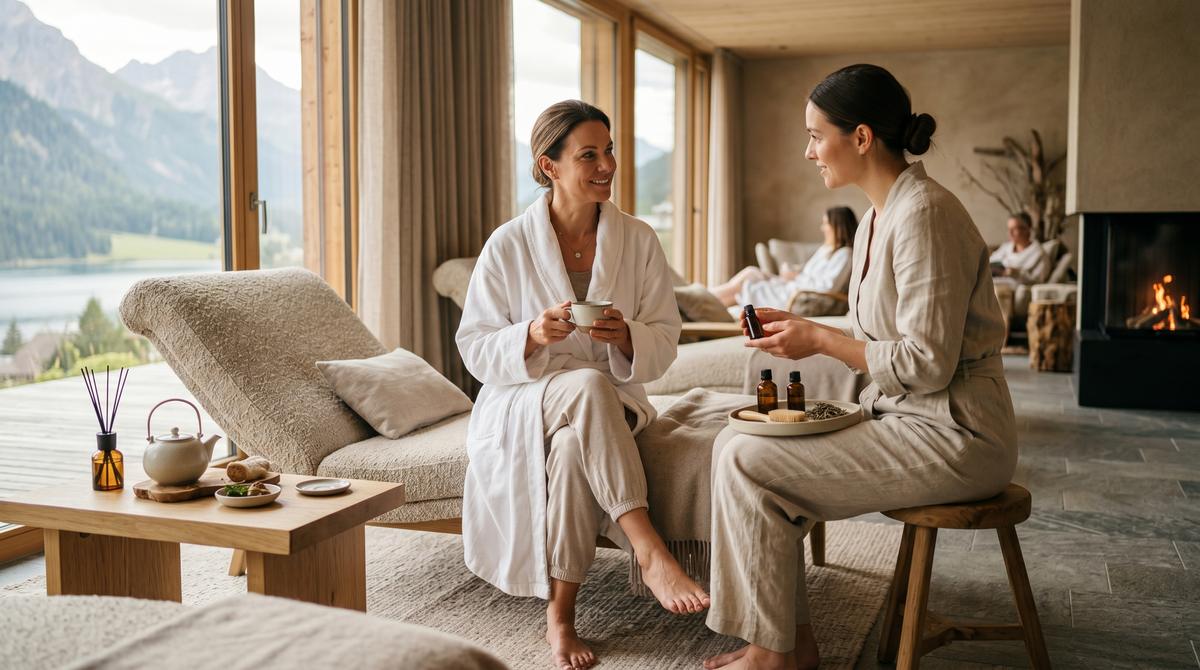

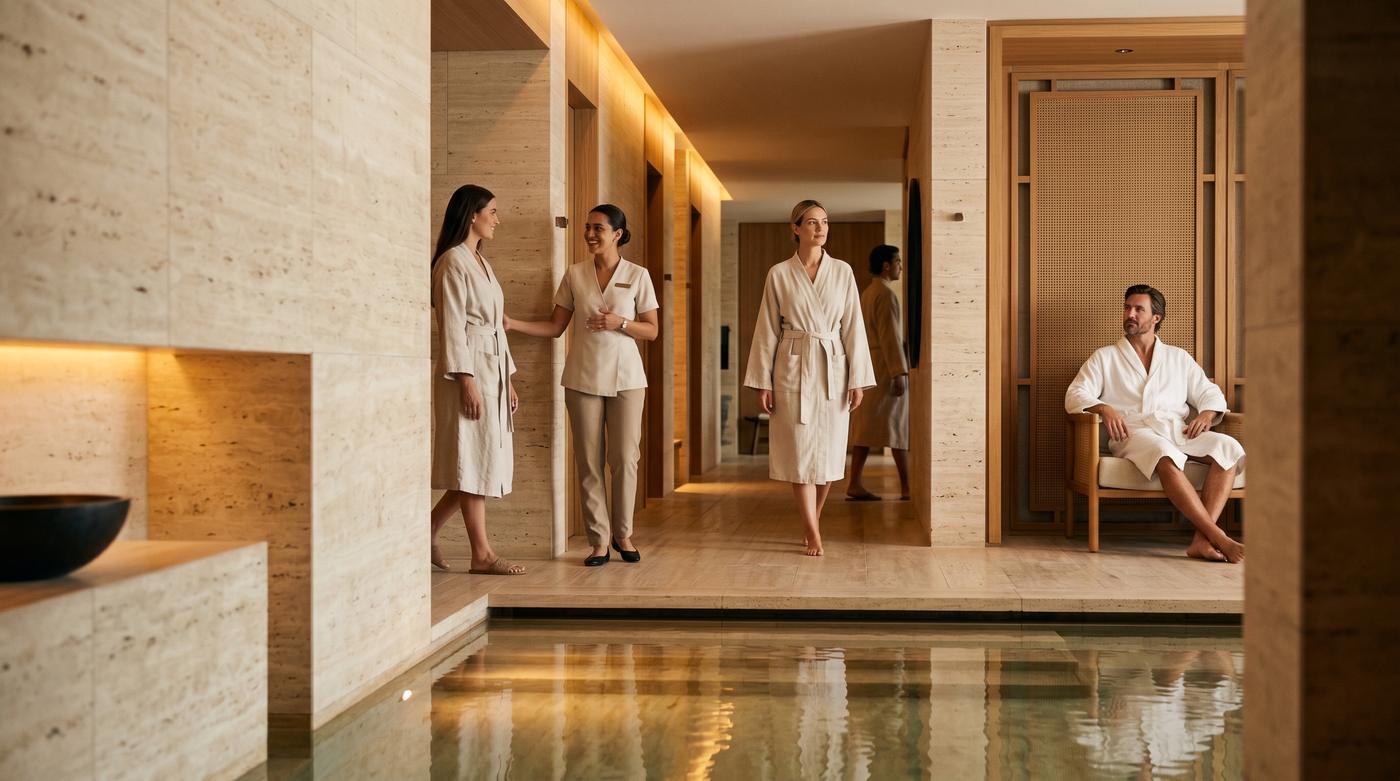
The contemporary guest no longer judges a hotel by the room, the breakfast or the pool alone. They judge how it will make them feel. And that difference, subtle as it sounds, changes everything.
A shift that has already happened
For decades, the spa was the extra. The place for whoever had spare time, whoever was on honeymoon, whoever needed a one-off massage. It was designed as an add-on, run as an add-on and, in most hotels, monetised as an add-on: badly.
That model is over. Not abruptly, but progressively — accelerated, certainly, by recent years of global pressure, remote work, business trips that blur into personal life, and schedules that no longer tell weekday from weekend.
The guest arriving at a five-star hotel today isn't there to switch off from their life. They're there to recover the energy to keep living it intensely. And they expect the place they stay in to support that.
What the market now reads
The major hotel groups already understand it: wellness isn't an amenity category, it's a position. Hotels that integrate wellbeing as a core part of their proposition — not as a separate area but as a cross-cutting philosophy — build a stronger relationship with their guest and a differentiation that is harder to replicate.
It isn't chance: the guest who lives a genuine wellbeing experience tends to return.
And when they return, they don't compare price. They compare how they felt last time.
The problem isn't the space, it's the operation
Many hotels already have the space. They have the sauna, the heated pool, the treatment rooms. What they don't have is a system that makes it work: a trained team, a clear protocol, a coherent experience from start to finish.
A beautiful wellness area run on improvisation isn't an asset. It's a fixed cost with minimal emotional return for the guest and insufficient financial return for the hotel.
The difference between a spa that gets used and one that doesn't isn't in the square metres or the equipment. It's in who operates it, and with what method.
Wellness as a strategic decision
Integrating wellbeing into a hotel isn't installing a hydromassage tub and calling an oil supplier. It's deciding what kind of guest you want to attract, what experience you want them to live and how you'll sustain that promise over time.
The hotels gaining ground in the premium segment aren't the ones with the most services. They're the ones with the most coherence.
At VES, we call that a system. A wellbeing ecosystem where every element — the space, the team, the rhythm, the service — works together to produce something the guest remembers and wants to return to.
That isn't optional. It's the standard the market already expects.