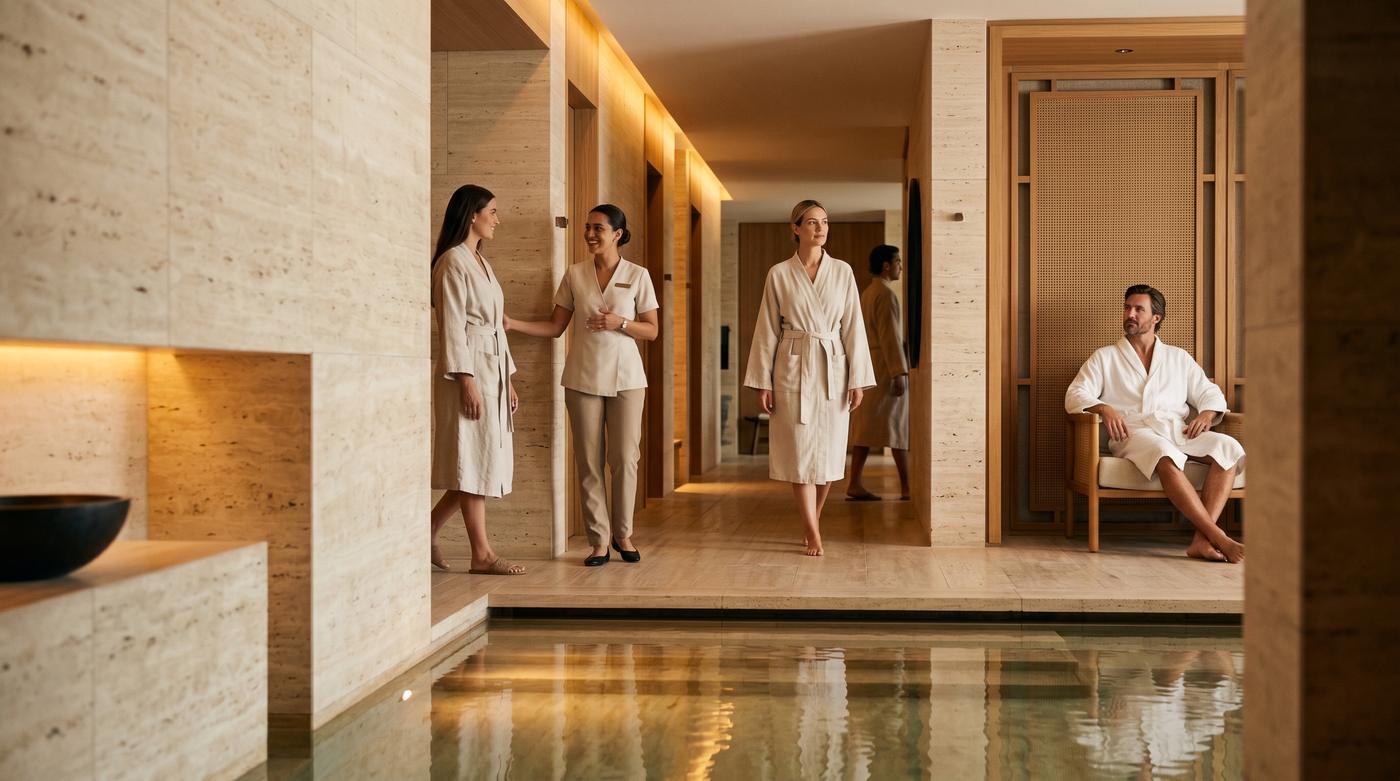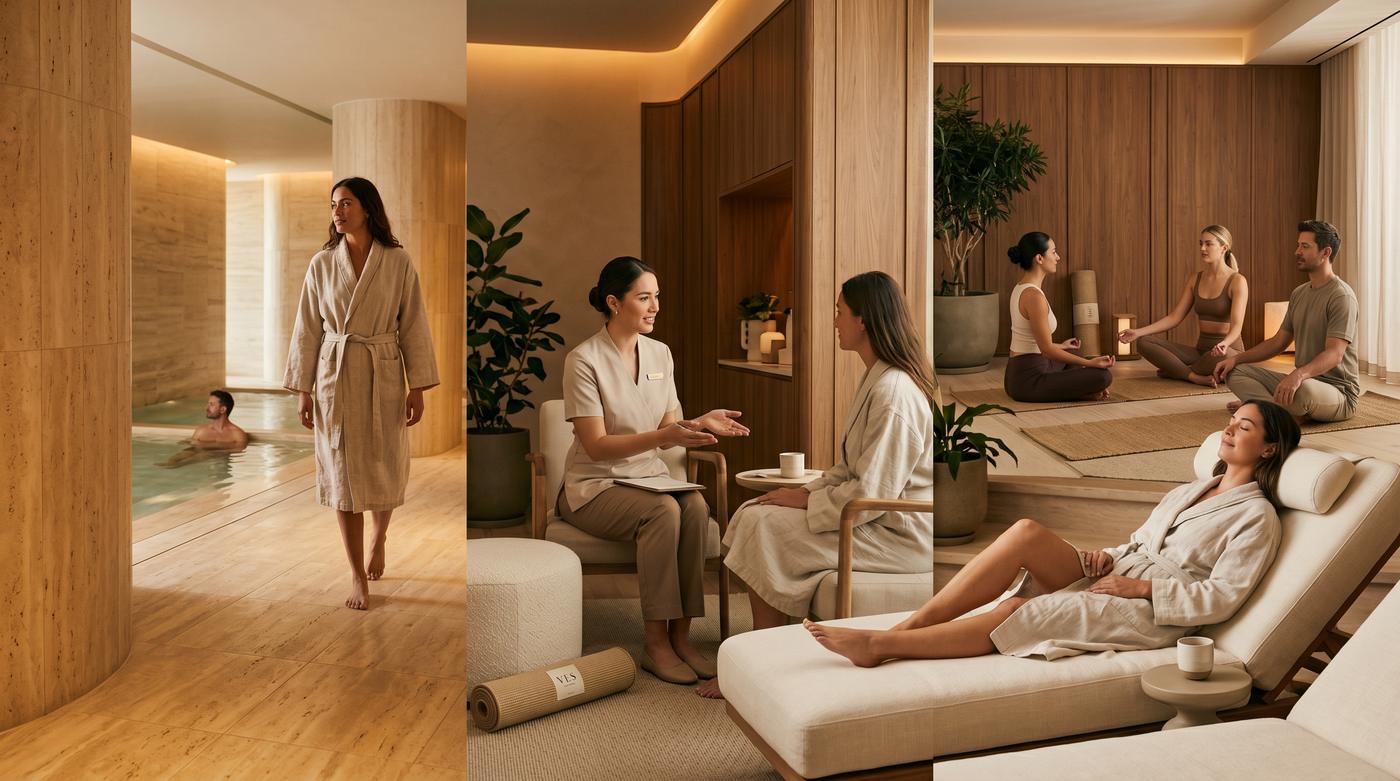

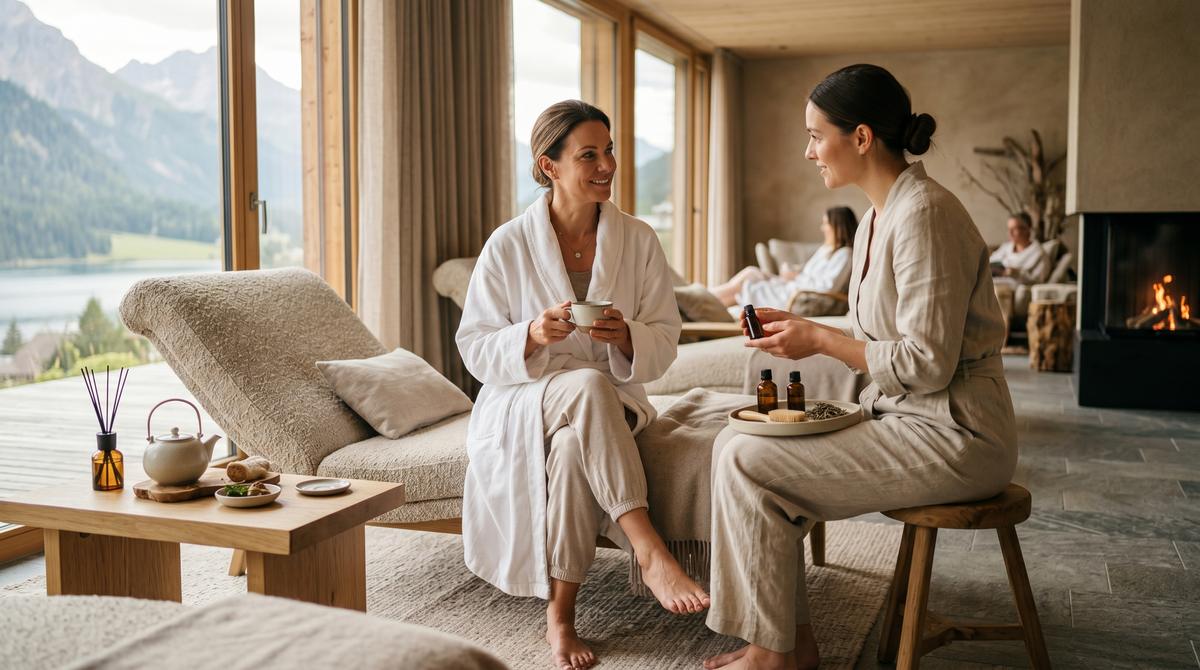
There's a type of traveller redefining premium hospitality. They don't travel to see more. They travel to recover something everyday life keeps taking away.
A new kind of traveller
Not the tourist. Not the backpacker. Not the usual executive who books the hotel nearest the airport and never leaves the room. This is someone different: an adult between 35 and 55, with an intense schedule, who has understood that rest isn't a luxury — it's an operational necessity.
This traveller chooses the destination by how it will make them feel, not only by what there is to see. They look for hotels that let them recover real energy, not just change the scenery. And when they find one, they return. And recommend it. And pay more.
What this guest looks for and doesn't always find
Real quiet. Not the absence of noise, but the absence of unnecessary stimulation. A space where there are no decisions to make, where the surroundings are built for body and mind to slow down without effort.
Continuity. A wellness area that doesn't close at eight in the evening. The chance to take a contrast bath at half past ten after a working dinner. A team available when they need it, not when it suits the hotel.
Personalisation without friction. They don't want to fill in a health form or sit through a medical consultation to use a sauna. They want someone with judgement to propose something that makes sense for their state in that moment.
Recovery as a reason to travel
A travel category is emerging that doesn't yet have a settled name but already exists as behaviour: the recovery trip. A weekend — or even a single night — chosen not for the destination but for the wellbeing space that destination offers.
The hotels capturing this segment aren't necessarily the largest or the most luxurious in conventional terms. They're the ones that have built a wellbeing proposition with enough depth to be the reason for the trip, not just an add-on to it.
What sets apart a destination people return to
The first visit can be won with marketing. The second is won only with experience.
The destinations the recovery traveller returns to have something hard to describe but easy to feel: coherence. The space, the team, the rhythm, the food, the temperature, the light — everything works in the same direction. Nothing jars.
That coherence isn't accidental. It takes a system. And a system takes an operator who understands that wellbeing isn't a list of services, but a way of designing every point of contact with the guest.
That's what we build at VES. And it's what makes the guest who seeks rest come back.