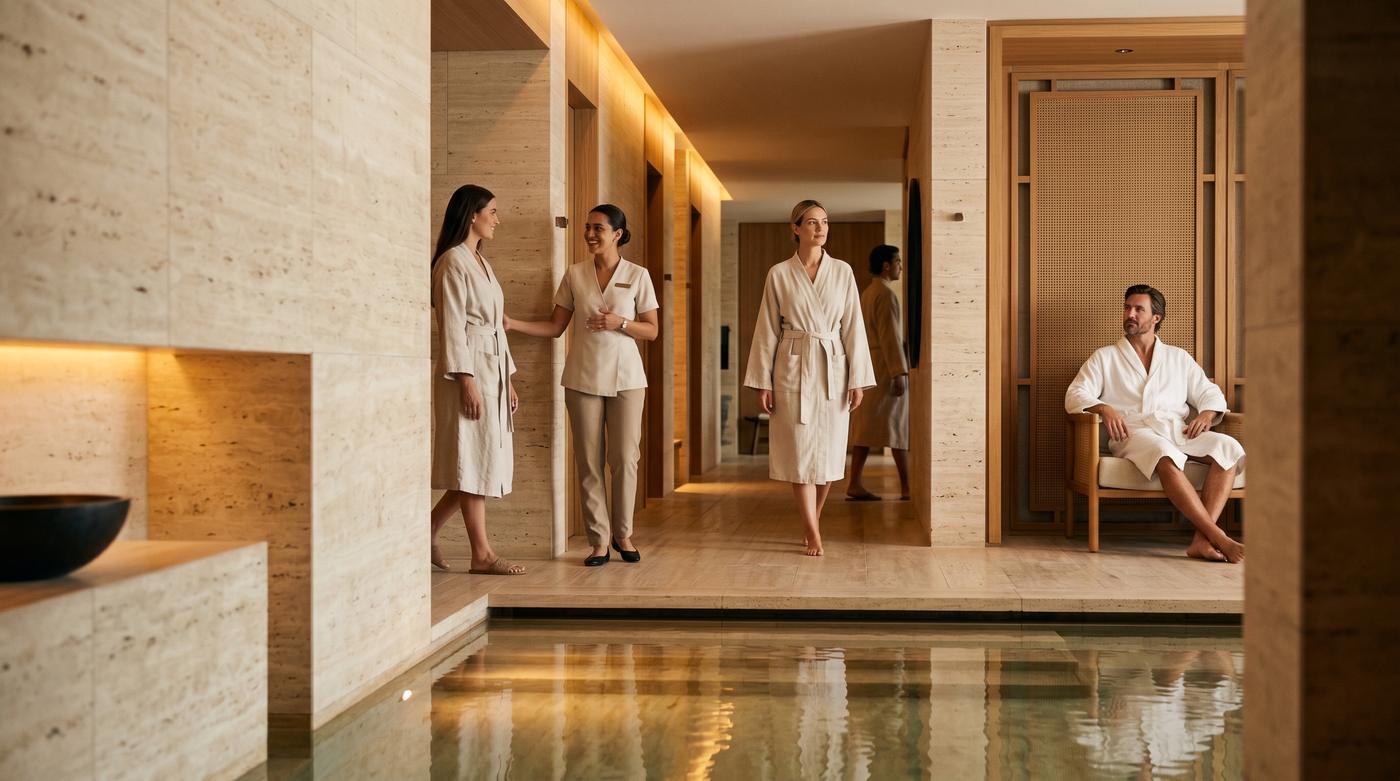

An empty wellness area is one of the most expensive mistakes a hotel can make. Not for what it cost to build, but for what it means to run it without results.
The most common error: designing for the photo
Most hotel wellness areas are designed from the inside out: an architect sets the spaces, a supplier installs the equipment, the hotel hires staff and opens the doors. The result is often a visually flawless space that no one knows how to use.
There's no clear journey. No welcome protocol. No proposition the hotel's own team can explain with conviction. The guest walks in, takes a look around, and leaves without having lived anything.
Use-led design starts from the opposite process: first you define the experience you want to produce, then you design the space that makes it possible.
Flow as invisible architecture
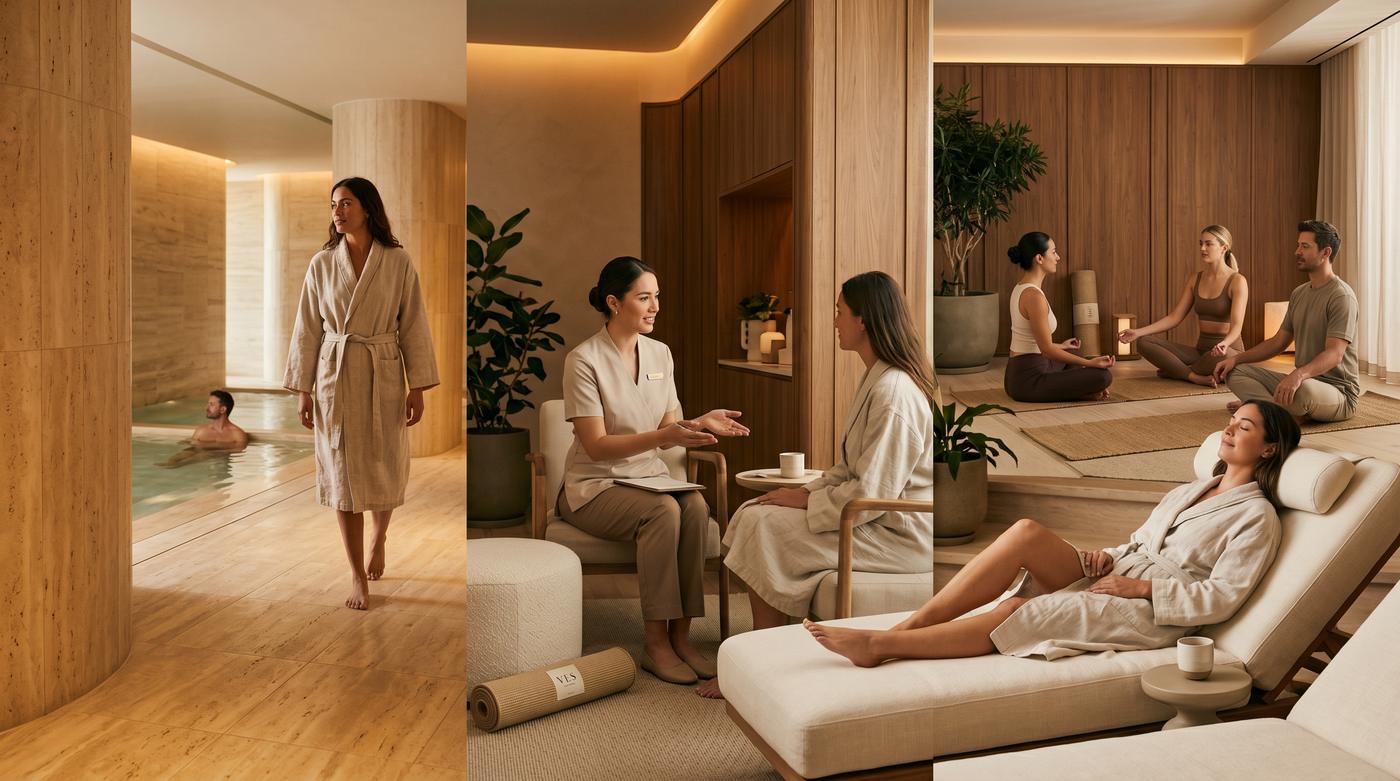
Wellness areas that work share one thing: a logical flow the guest can follow without anyone having to explain it. There's a natural progression — heat, water, rest, recovery — that creates the sense of having lived something complete, not of having toured facilities.
That flow isn't accidental. It's designed. And it requires the space, the furniture, the signage and the team's guidance to work as one coherent system.
When the flow works, the area fills itself. The guest who enters out of curiosity ends up in the rest area forty minutes later, feeling good and already thinking about coming back tomorrow.
A team that guides, not one that waits
The biggest differentiator between an area that gets used and one that doesn't isn't the marble or the lighting. It's the team.
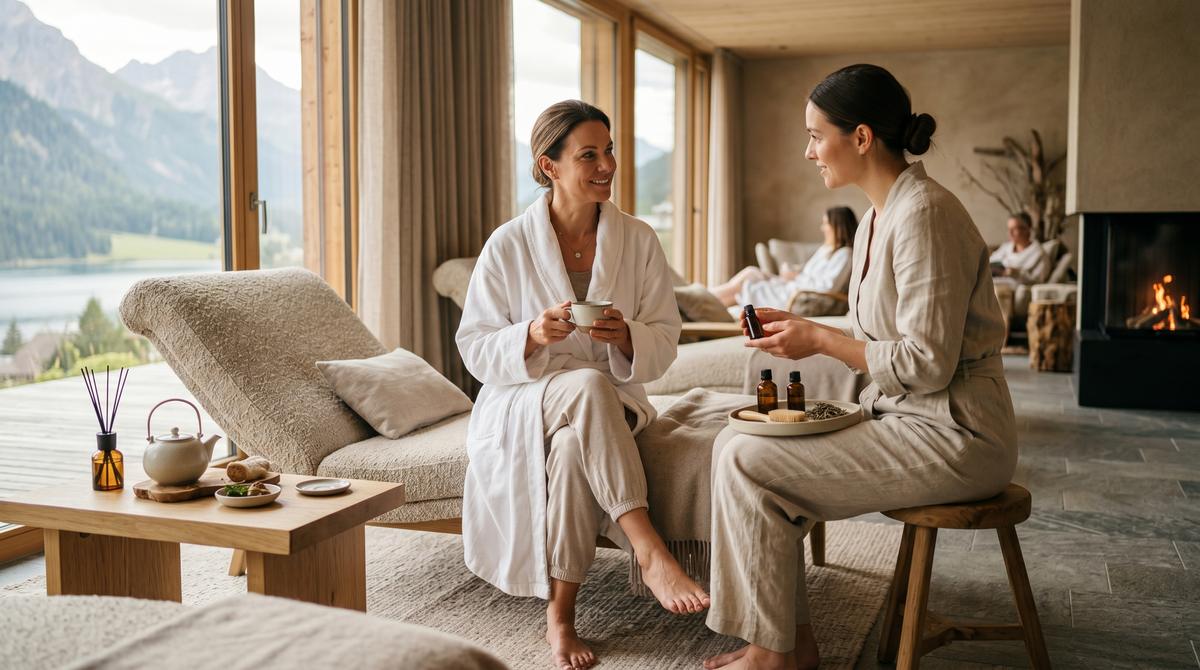
A wellness team that waits passively for the guest to ask for something is a team that generates no experience. A team that guides — that anticipates, proposes and accompanies without intruding — is the one that turns a visit into something memorable.
This isn't generic hospitality. It takes specific training in wellbeing, in reading needs, in how to present a recovery circuit to an executive arriving jet-lagged at eleven in the morning.
Metrics that matter
A wellness area that works has measurable indicators: usage rate per occupied room, average spend per visit, return frequency during the stay, an area-specific satisfaction score. If your area doesn't have those indicators, it doesn't have a system.
At VES we operate with data from day one: we can see how many guests use the area, which services they take, at what time of day, and how that evolves across the week. That information is what makes it possible to adjust, improve and scale.
A beautiful area without data is decoration. With data, it's an asset that grows.