

A hotel is extraordinarily good at hospitality, rooms, dining and concierge. Operating high-level wellness takes an entirely different set of competencies. Doing both well at the same time is possible, but inefficient. There's a smarter way.
The problem of the spa as a cost centre
Most hotel spas run as cost centres, not value centres. The hotel invests in the space, hires specialised staff on a fixed payroll, absorbs the costs of training, replacement and management, and gets a return that rarely justifies the investment compared with the rest of the property.
It isn't a demand problem. It's a management-model problem.
High-quality wellness staff are scarce and expensive. They need continuous training, have a long learning curve and a high turnover rate if they're not in the right professional environment. A hotel managing its wellness in-house is taking on all that complexity for an activity that isn't its core competence.
What the hotel loses by trying to do it alone
When a hotel runs its own spa without a solid methodological system, what typically happens is this: the space works well in high season and sits underused in low season. Staff quality varies with turnover. The experience is inconsistent — excellent one day, mediocre the next. And the guest perceives that inconsistency even when they can't articulate it.
The result is an area that exists on the hotel's map but builds no reputation, drives no loyalty and doesn't justify the operating cost it carries.
The specialised operation model
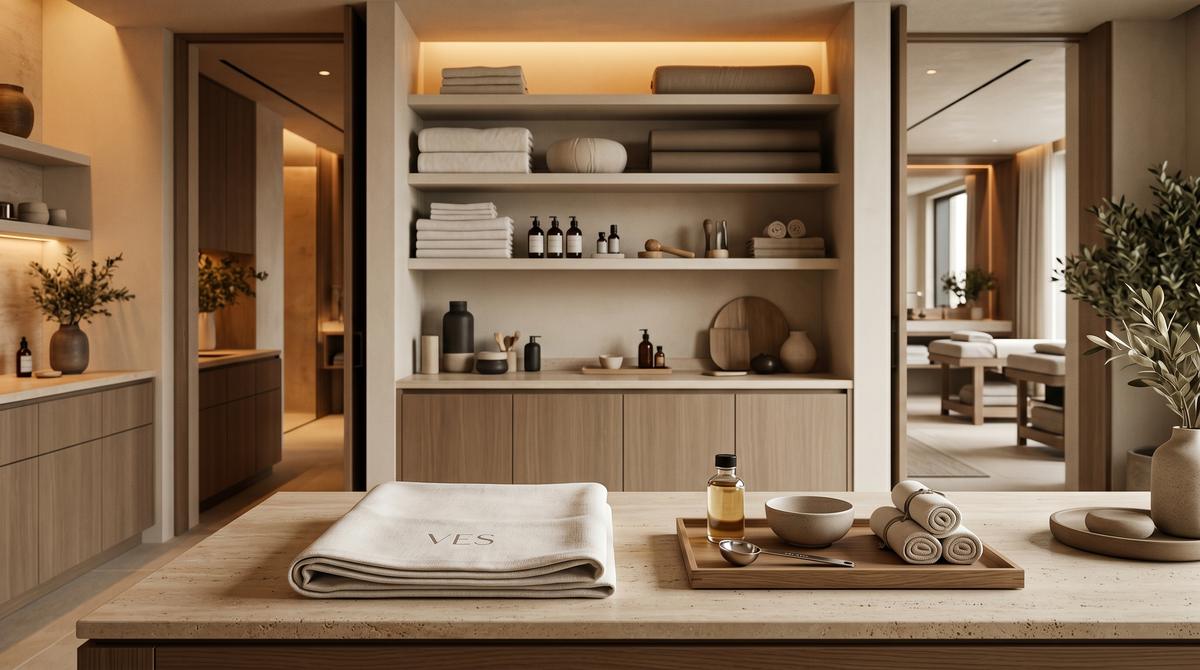
VES proposes something conceptually different: the hotel offers the space and the promise, and VES brings the system, the trained team and the full operation.
In practical terms, this means the hotel doesn't hire or manage wellness staff. It doesn't design protocols. It doesn't train the therapists. It doesn't resolve the incidents of daily operation. VES does all of that to the Seven Senses System standard.
The hotel provides the space and the promise; VES provides the system, the trained team and the operation. Responsibilities and operating costs are defined per project, with revenue-share structures adapted to its infrastructure and objectives.
Why the revenue-share model protects both sides
A well-structured revenue-share model aligns incentives in a way a fixed fee can't: VES's stake is tied to the value the operation generates. When the area performs, both sides benefit proportionally.
That alignment produces something a standard services contract doesn't: an operator as committed as the hotel to making the experience work, because the objective is shared.
What changes for the guest
For the guest, the difference is invisible structurally but completely visible in the experience. They don't know VES operates the area. What they know is that every time they walk in, the experience is consistent, the team is trained to read and attend to them with judgement, and the circuit has a clear logic that shows in every visit.
That's what generates return, recommendation and the sense that this hotel has something the others don't.