
Flying isn't neutral for the body. A long flight — or several short ones in a few days — produces a set of physiological effects that don't clear on their own with a night's sleep. There is a protocol to reverse them.
What travel does to the body
An aircraft cabin is a hostile environment for human physiology. Cabin pressure is roughly equivalent to being at 2,000 metres of altitude: available oxygen is lower, which reduces peripheral saturation and generates subclinical cellular fatigue. Relative humidity drops to 10–15%, which dehydrates mucous membranes and raises blood viscosity. Prolonged immobility slows peripheral circulation and builds postural tension.
On top of that comes jet lag on transoceanic flights: circadian desynchronisation produces a state that goes far beyond feeling tired. It affects hormonal regulation, metabolism, digestion, mood and cognitive capacity — for one to three days on moderate journeys, up to a week for changes of more than six time zones.
The most common mistake: waiting for it to pass
The frequent traveller's usual response is to ignore the impact of the trip and trust the body to adjust on its own. And to some extent it does. But spontaneous adjustment is slower, more incomplete and more costly in performance terms than an active recovery process.
The traveller who lands, forces a working dinner that same night and goes to bed late is stacking deficit on deficit. The one who spends 45 to 90 minutes on a reactivation protocol — hydration, mobility, thermal regulation, light exposure at the right time — reaches the next day with the system reset.
A travel-recovery protocol
There is no single universal protocol, because the effect of a trip depends on the direction of the flight, its length, the arrival time and the person's prior state. But there are principles that work consistently.
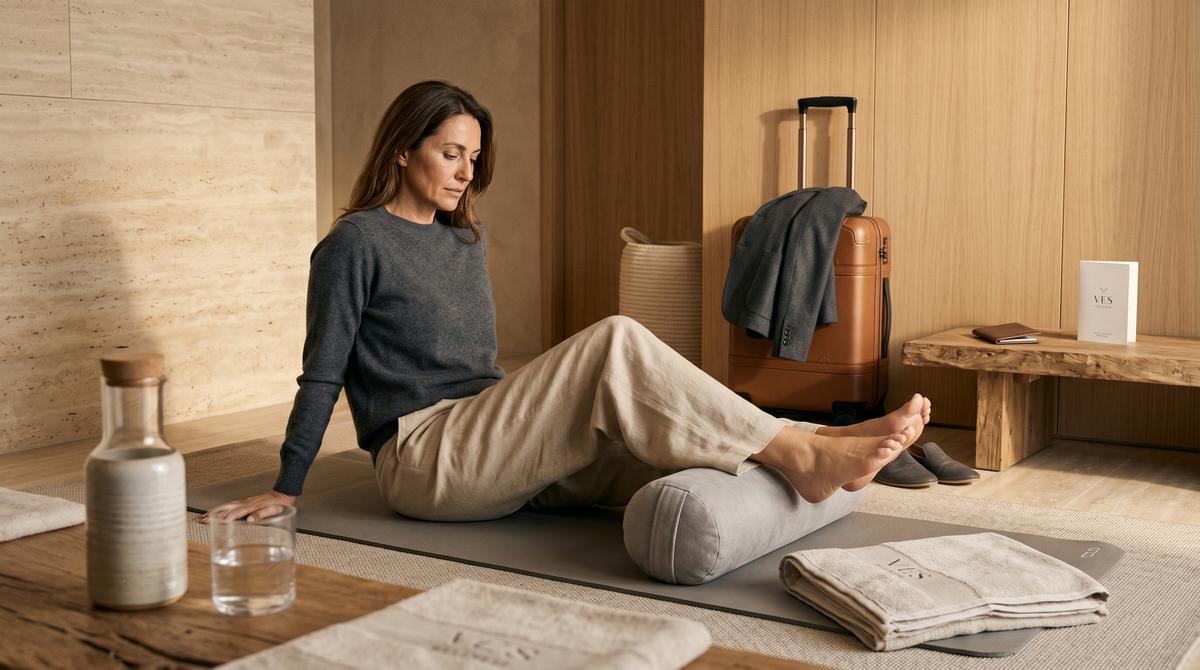
Active hydration in the first two hours after landing. Joint mobility to reactivate peripheral circulation and release built-up postural tension. Thermal regulation — preferably heat followed by cold contrast — to stimulate the vascular system and speed the clearing of metabolites. Exposure to natural light at the time that matches the destination, to anchor the new circadian rhythm.
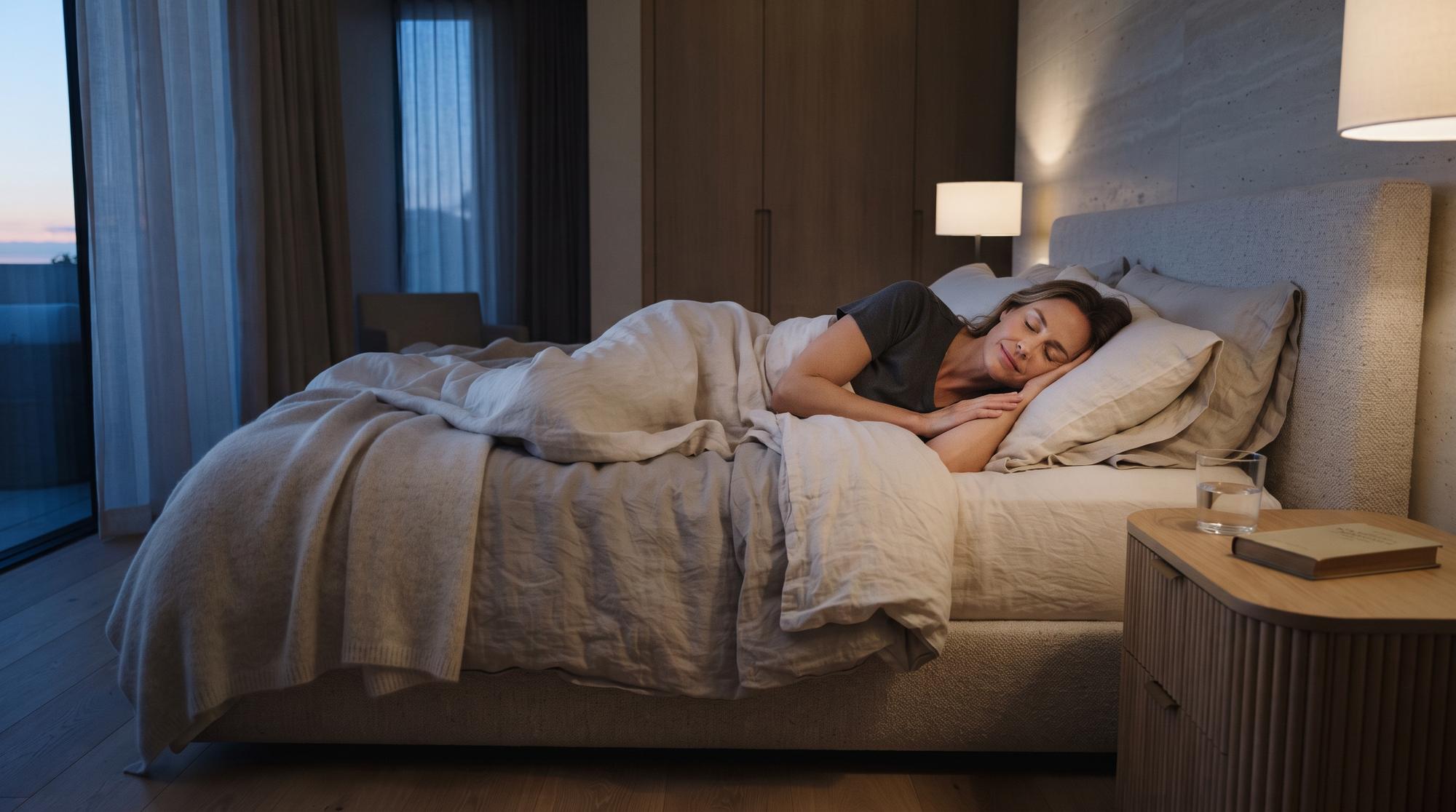
And above all: don't force sleep immediately if the body isn't ready. Forced sleep at the wrong moment can deepen the desynchronisation instead of resolving it.
The hotel as an ally in travel recovery
A traveller who arrives at a hotel with a working recovery area has access to something that isn't always available at home: an environment designed for exactly what they need in that moment.
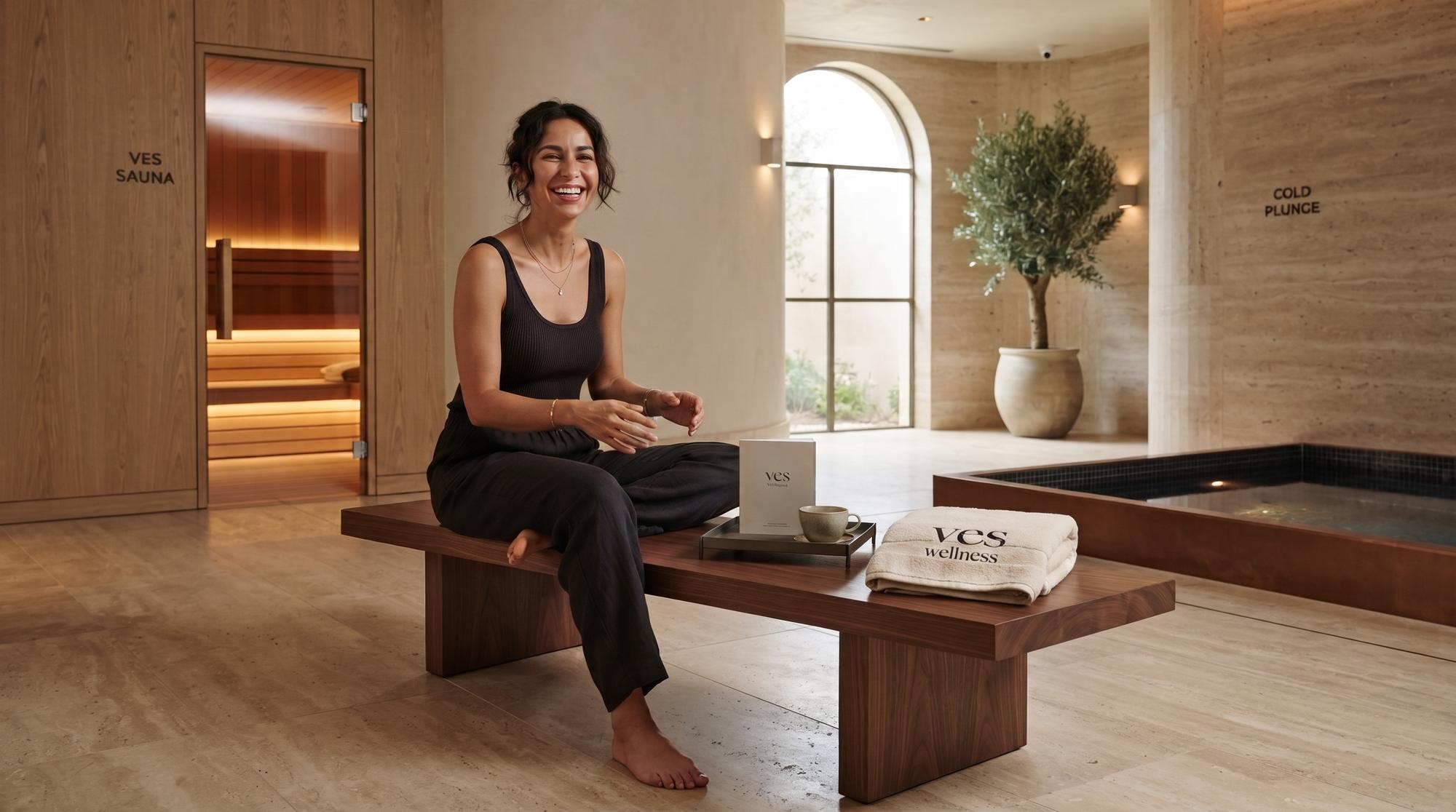
Hot water. Sauna. Cold contrast. A quiet rest space. A team that can read the state the guest arrives in and which sequence makes most sense for them.
That isn't an extra. For the frequent traveller, it's the reason they return to that hotel and not another.