
The paradox of high performance: the more you need to look after yourself, the less time you have to do it. There's a way out of that trap. It doesn't take more time. It takes more intention.
The myth of time
The most common excuse for not looking after yourself isn't motivation. It's time. "I don't have time for the gym." "I can't switch off for three days." "Yoga isn't for my schedule."
The problem with that reasoning is that it assumes wellbeing needs large blocks of time and ideal conditions. And it doesn't. What it needs is presence — which is exactly what high performance erodes first.
The person with the most intense schedule doesn't need to retreat to the countryside for a week to recover. They need to learn to extract real recovery from the margins their schedule already has.
Where the time you don't see is hiding
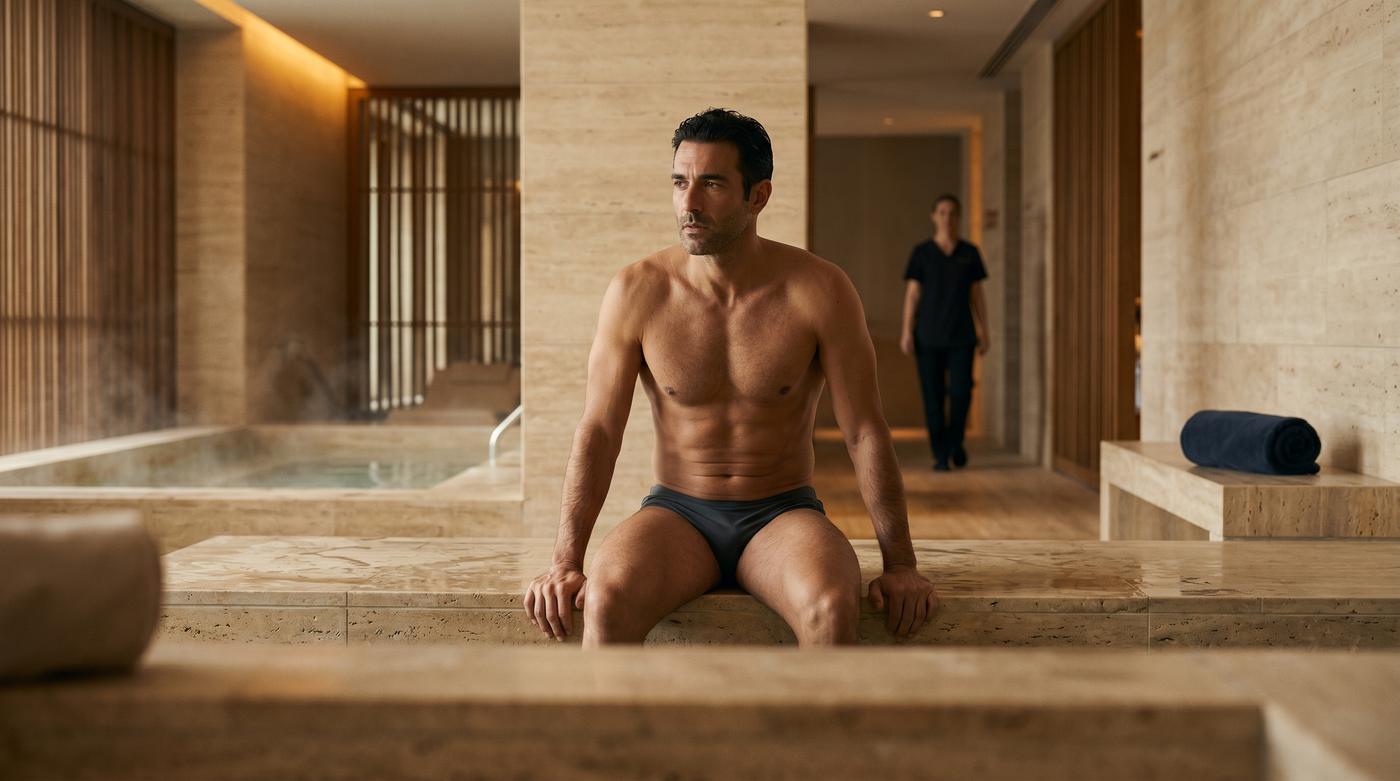
Between one meeting and the next there are ten minutes. Between the working breakfast and the flight, forty. Before the first call of the day, fifteen. In the hotel where you sleep tonight there's a wellness area that closes at ten.
Those margins exist in almost every intense schedule. What doesn't exist — yet — is the habit of using them with recovery in mind instead of using them to check email.
It isn't about doing more things. It's about doing one different thing in the time you already have.
Efficiency as a wellbeing principle
Wellbeing designed for high-demand schedules can't be inefficient. It can't depend on the environment being perfect, on forty-five free minutes, or on Friday having no last-minute meeting.
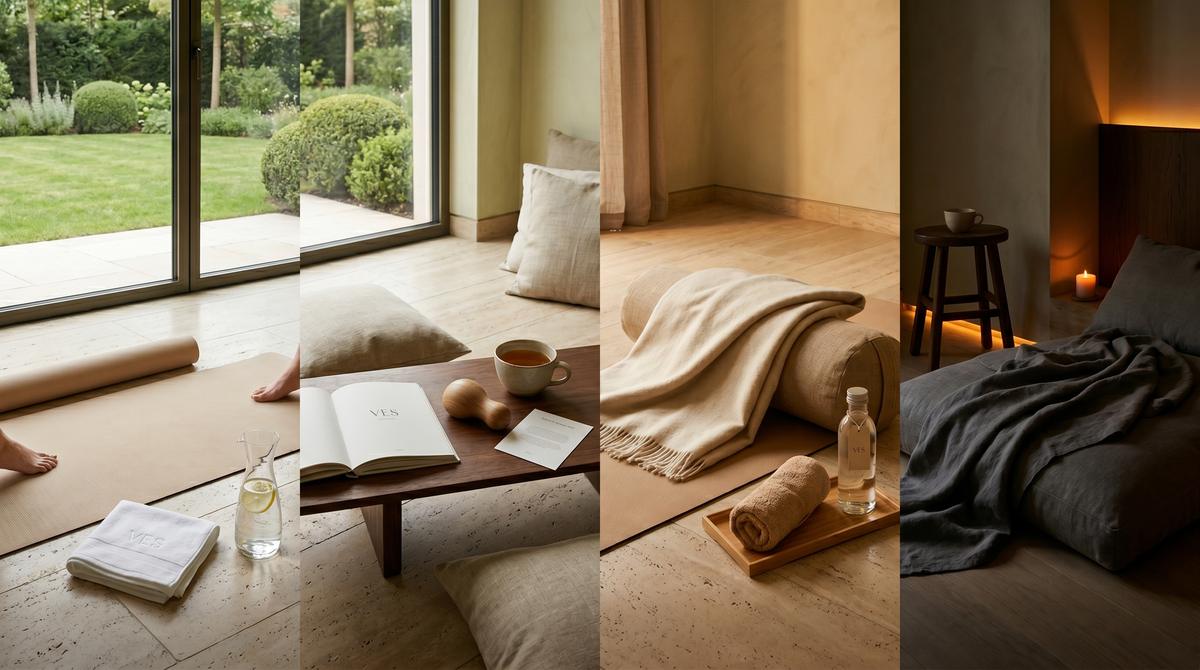
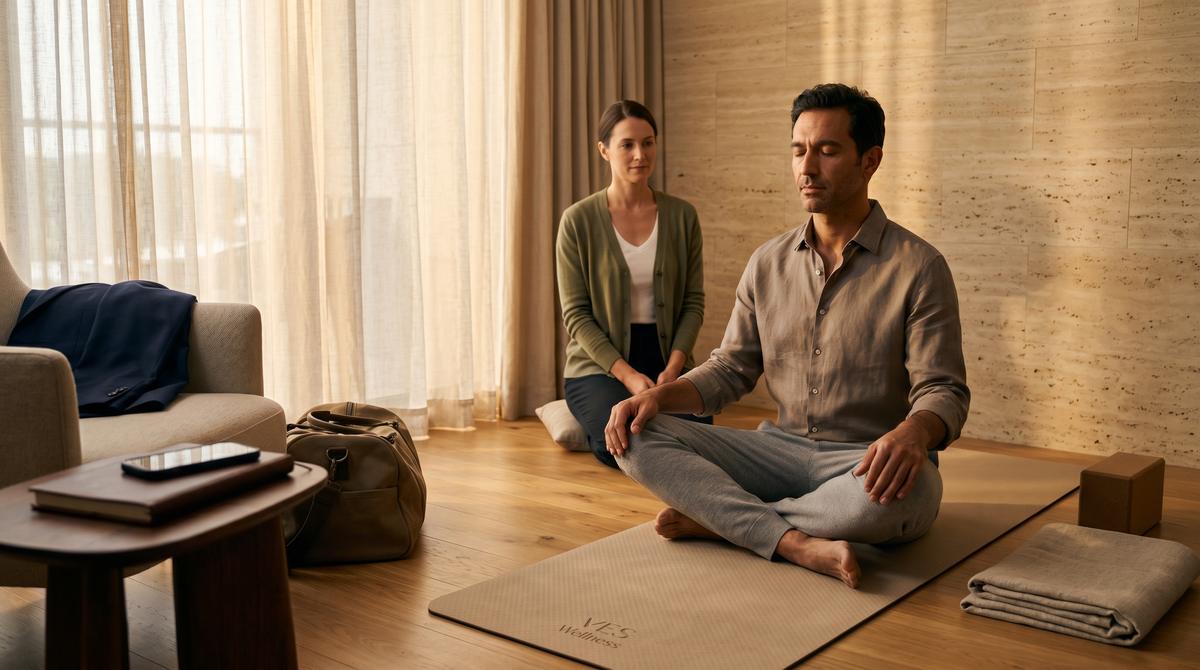
It has to work in fifteen minutes. It has to be doable in the hotel room, in the wellness area before breakfast, in the aircraft seat before landing. It has to have a clear protocol so the mind — used to executing tasks, not recovering — knows exactly what to do and for how long.
Improvisation doesn't work for this profile. Structure does.
What changes when wellbeing is consistent
It isn't about transforming your life. It's about sustaining performance for longer, with less physiological and emotional cost.
People who build in consistent recovery protocols — even brief ones — tend to report better sleep quality, reduced cognitive fatigue and greater emotional stability under pressure.
These aren't the results of a spiritual retreat. They're the results of doing something small and specific, regularly, with the right intention.
That's what VES exists for. Not for those with time. For those without it who need it all the same.