

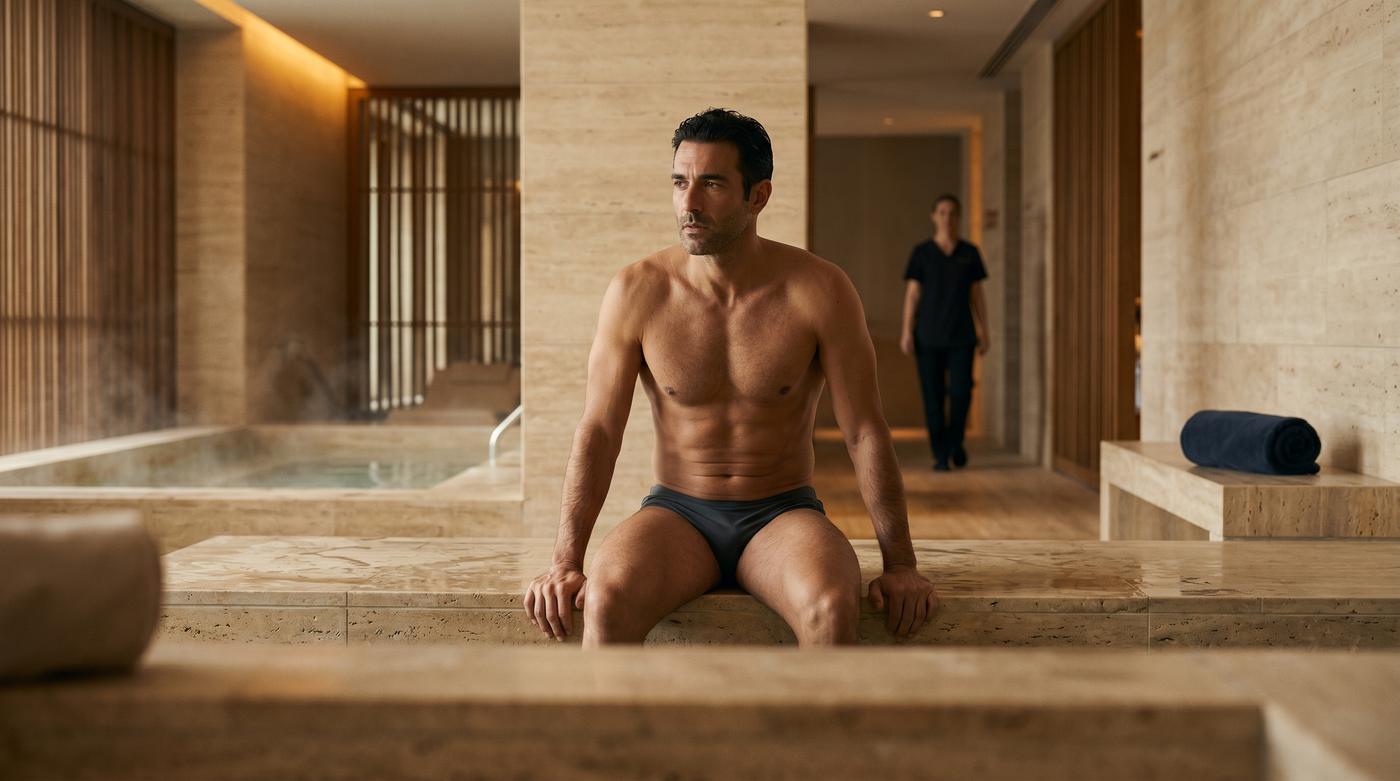
Training produces the stimulus. Recovery produces the adaptation. Without adequate recovery, a body under load doesn't improve — it wears down. The difference between sustainable performance and overtraining lies, almost always, in how you recover, not in how you train.
The principle sport understood first
High-performance sport has known for decades what the rest of the population is learning now: physiological adaptation doesn't happen during effort. It happens during the rest that follows effort.
A muscle placed under load doesn't grow in that moment. It grows in the hours that follow, during deep sleep, when the body synthesises muscle protein in response to the stimulus received. If that sleep is insufficient or the recovery window too short, the adaptation isn't completed. Performance doesn't improve. And the risk of injury rises.
This principle applies in exactly the same way to any body under load, not just elite athletes.
Why an active body needs more than passive rest
Resting isn't the same as recovering. A body that has accumulated load — muscular, joint, nervous — doesn't recover simply by stopping. It needs active interventions that accelerate the physiological repair processes.
Contrast therapy — alternating heat and cold — produces rhythmic vasodilation and vasoconstriction that speeds the clearing of metabolites and reduces muscular inflammation. Passive and assisted mobility maintains joint range and prevents the stiffness that sets in when the body doesn't move well after effort. Compression and elevation aid venous and lymphatic return in limbs that have worked hard.
None of this is magic. It's exercise physiology applied systematically.
The mistake of permanent intensity
Performance culture has produced a physically active profile that confuses quantity with quality: more kilometres, more sets, more sessions per week. And that treats rest — when it considers it at all — as wasted time or a sign of weakness.
The result is predictable: stalled performance, chronic fatigue, overuse injuries and, eventually, abandoning the very activity that caused it all.
The body that trains intelligently isn't the one that trains most. It's the one that recovers better between sessions. The one that arrives at each session with a rested nervous system, repaired muscle and intact motivation.
Recovery as part of the plan, not the exception
At VES we work with active bodies — athletes, people in phases of high physical demand, travellers who keep training habits — designing recovery as an integral part of the performance plan, not as something that happens when there's time or when the body forces a stop.
A well-designed recovery protocol doesn't subtract training days. It makes them more effective. The body that recovers well between sessions can tolerate more load, adapt faster and sustain performance for longer.
That's what it means to push yourself intelligently.